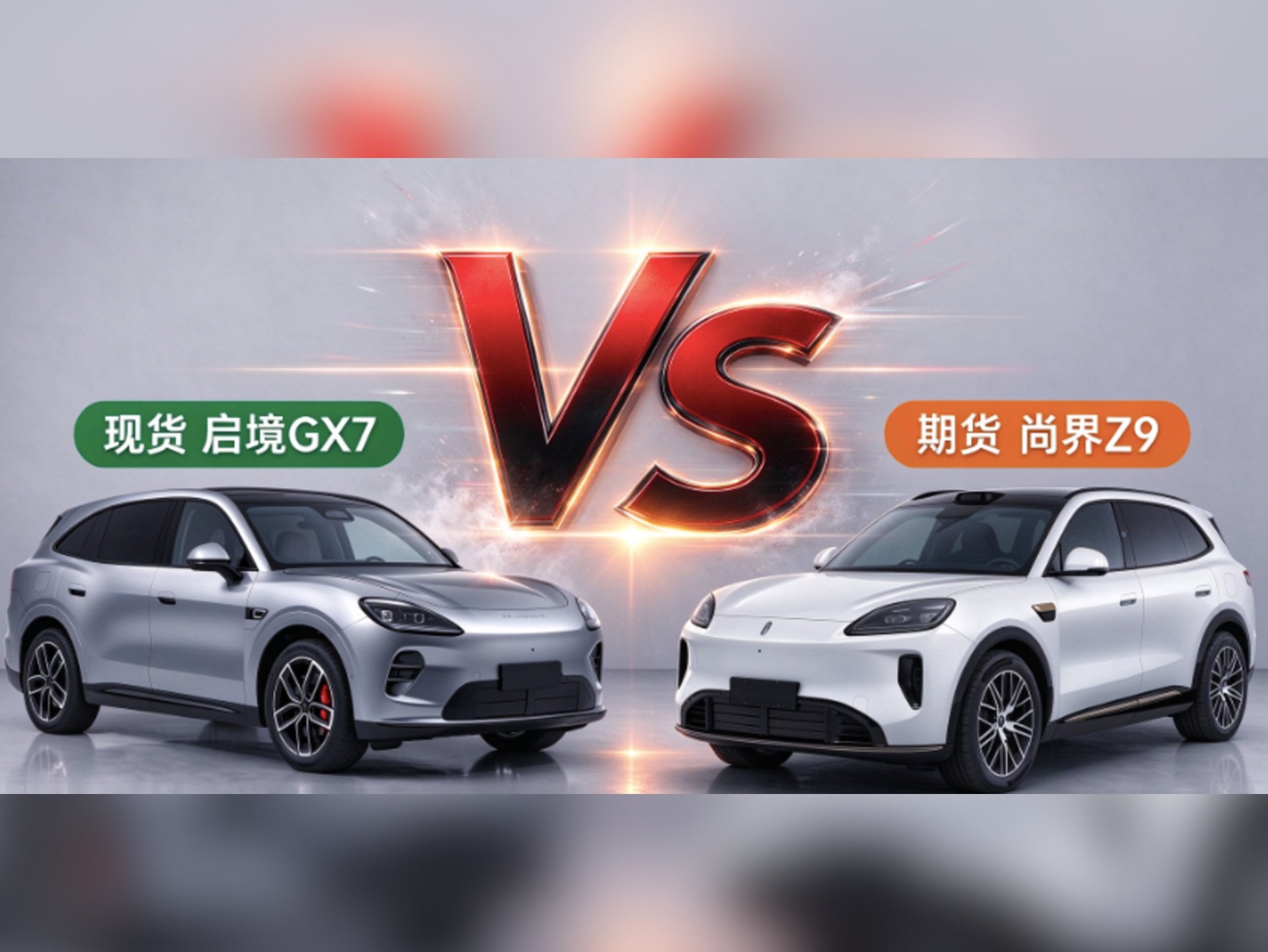
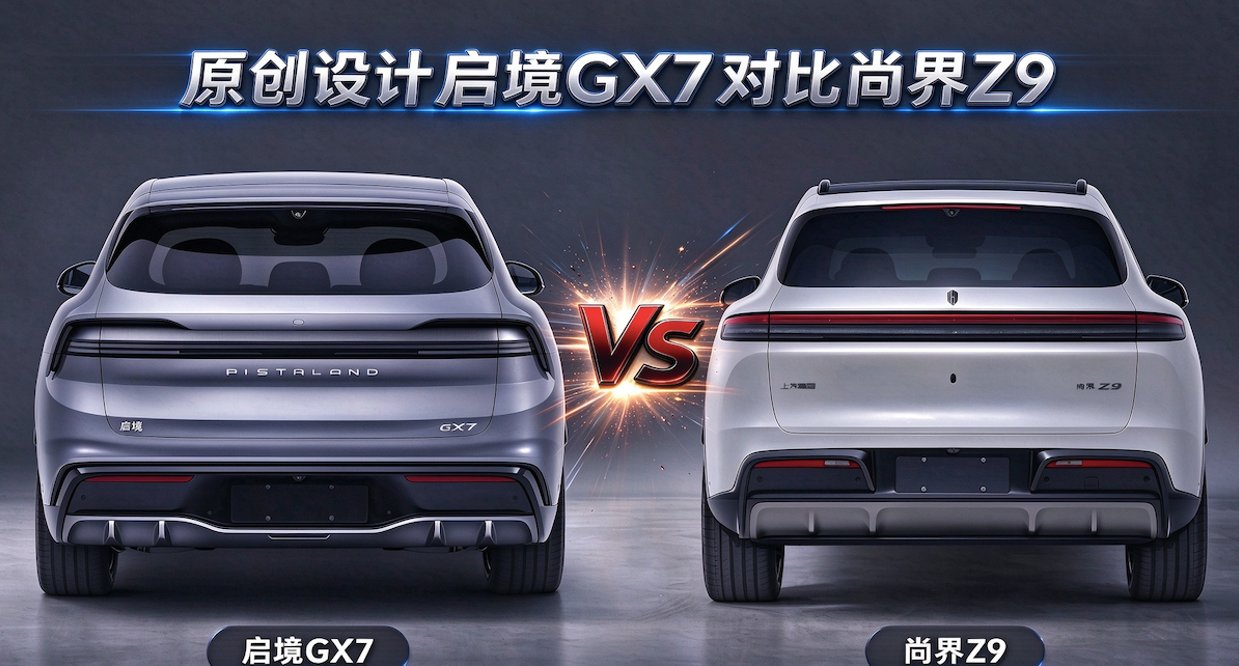
In mid-October, as soon as the MIIT filing photos of the Shangjie Z9 came out, netizens exploded in the comments section—"Isn't this just a bigger Qijing GX7?" Similar quadrilateral outline headlights, similar roof-mounted watchtower-style LiDAR, similar full-width taillights... Placing these two Huawei-family mid-to-large SUVs side by side does indeed give a strong "close relative" impression.
But similarities aside, the timeline of who came first cannot be hidden. The Qijing GX7 had its global premiere in June this year and was officially launched on September 23, completing the entire process from design to mass production delivery. What about the Shangjie Z9? It has just completed MIIT filing, hasn't even announced pricing, and delivery won't come until at earliest the second quarter of 2027. One is already running on the road, the other is still on paper—who defined this design language and who is following is crystal clear.
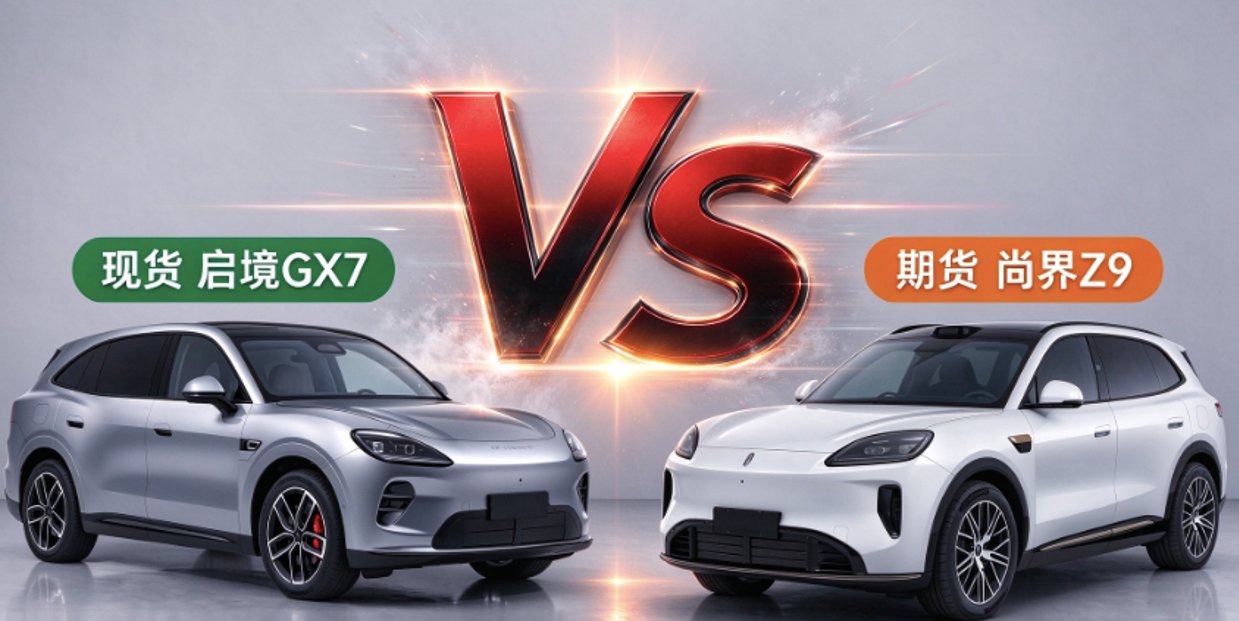
More importantly is the systemic depth behind the design. The Qijing's styling was jointly executed by Huawei's Milan Aesthetics Research Institute and the Qijing team, with nearly a hundred designers taking 8 months to complete design finalization. The GX7 inherits the "Elegant Tension Aesthetics" family language of the GT7—a diving, low-slung front end, a two-stage roofline, wide flared wheel arches, and three-stage tension curves. Every single line is the product of hundreds of sketches and data refinement. From the dimension of design originality, the GX7's first-mover advantage and systematized capability are not something the Shangjie Z9 can catch up to by simply "looking similar."
Betting when information is insufficient is the biggest risk; making decisions after the cards are on the table—certainty itself is the reward. From the consumer's perspective, the question then arises: choose the "in-stock" Qijing GX7, or wait for the "futures" Shangjie Z9?
Price: Transparent pricing is the most straightforward sincerity
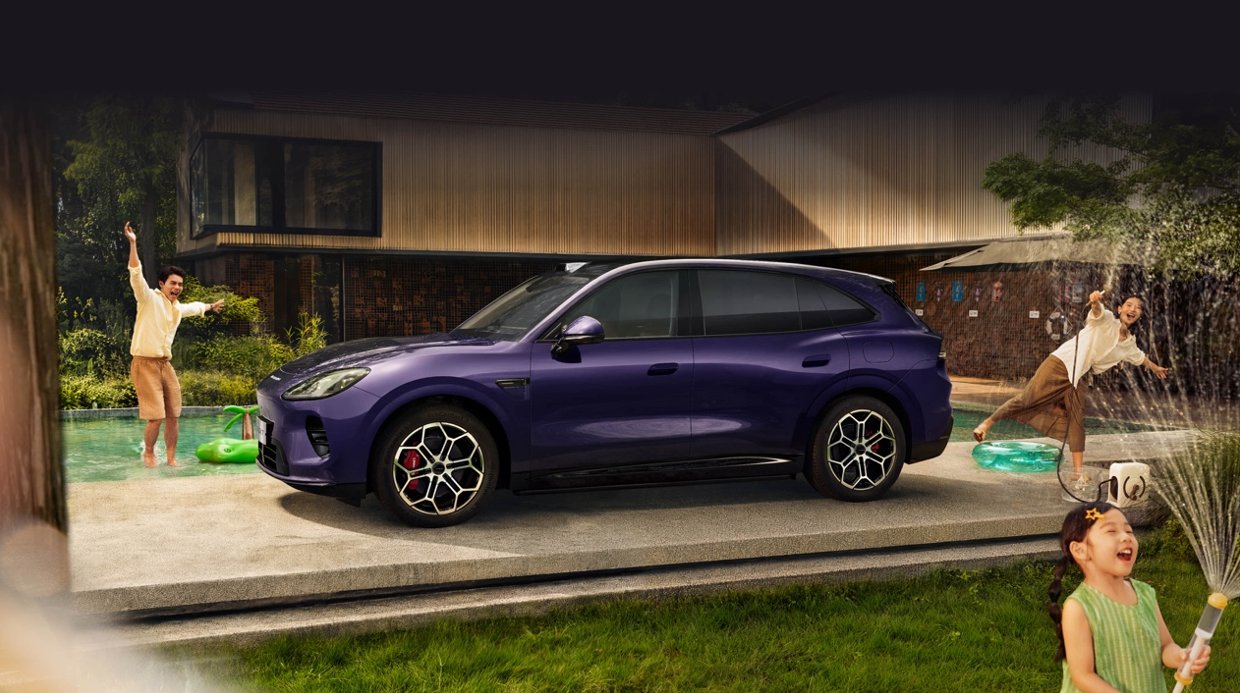
Let's look at the most practical issue first. The Qijing GX7 entry version has an official guide price of 239,900 yuan, and during the limited-time benefits period it can be had for 229,900 yuan. The top-spec tri-motor four-wheel-drive is 301,900 yuan, already including Huawei Qiankun ADS 5 Ultra, four LiDARs, CDC continuously variable damping shock absorbers, and front Continental four-piston fixed calipers—configurations that on competitors often require paid options, yet the GX7 has them standard across the lineup at no extra cost.
The Shangjie Z9 still has no official pricing. The rumored "350,000 to 400,000 yuan" comes from blogger estimates, not a brand announcement. Even taking the lower bound of the estimated range at 350,000 yuan for comparison, the entry threshold is nearly 50,000 yuan more expensive than the GX7 top-spec, and over 120,000 yuan more than the GX7 entry version. A car whose price hasn't even been announced, asking consumers to shell out three to four hundred thousand yuan in real money to gamble—astute buyers can do the math clearly.
Configuration: One fully laid out, one still a mystery box
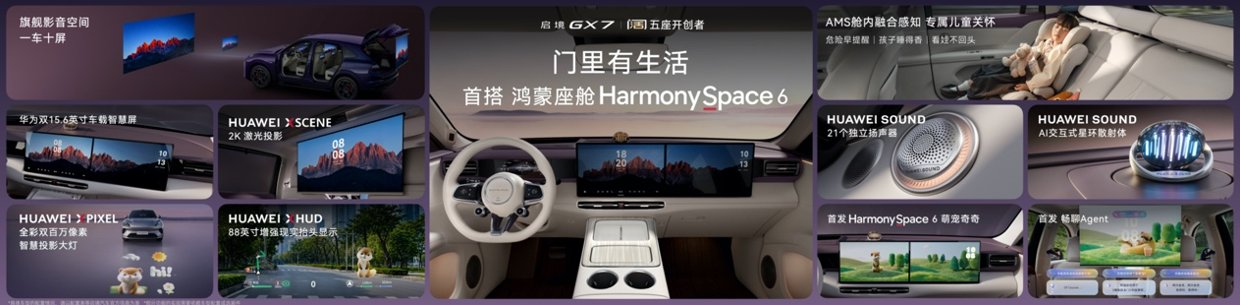
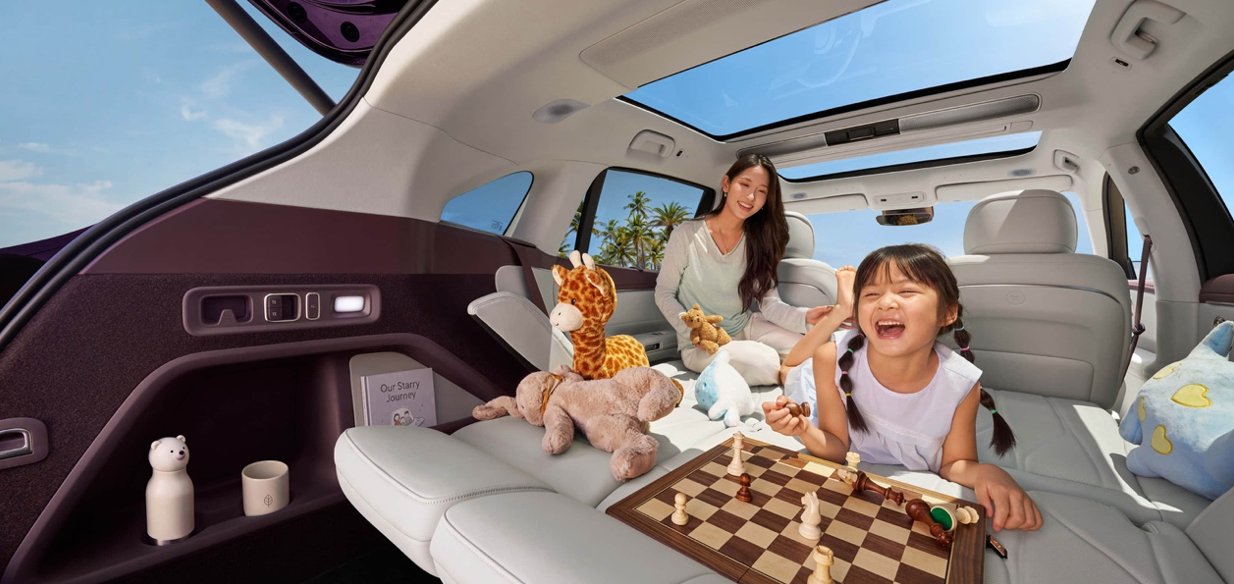
The GX7's complete configuration table is already familiar to us: the cabin runs HarmonySpace 6, with a 15.6-inch smart screen each for the center console and front passenger, an 88-inch AR-HUD head-up display, and higher trims featuring 21-speaker HUAWEI SOUND audio. Both driver and passenger seats support 12-way power adjustment, with heating, ventilation, massage, zero-gravity mode, and power leg rests all available. The rear seatback can be electrically adjusted to a 52-degree recline, with heating, ventilation, and leg rests. The entire vehicle has 11 airbags, the body uses 2200MPa hot gas expansion tube beams, and the trunk volume ranges from 868 to 2,215 liters. The extended-range variant has a combined range exceeding 1,500 kilometers, and the tri-motor version supports 5C supercharging, going from 30% to 80% in 10 minutes.
What about the Shangjie Z9? What the MIIT filing tells us is only body dimensions, motor power, and tire specifications. What brand of audio? How big are the screens? What cabin system? What seat materials? How big is the battery? What's the range?—All question marks. What consumers face is not a multiple-choice question but a fill-in-the-blank question, except the examiner hasn't figured out the answers yet.
Chassis: Structure defines the form, tuning defines the spirit
Both cars stand on Huawei's shoulders, but they stand in different postures.
The GX7 adopts Huawei's Qiankun Chitu platform, with a six-in-one全域 integrated architecture that coordinates drive, braking, steering, suspension, body, and thermal management under unified control, with deterministic latency controlled within 1 millisecond. Front double wishbone plus rear H-arm multi-link independent suspension, CDC shock absorbers standard across the lineup, and dual-motor and above versions equipped with closed dual-chamber air suspension, with body height adjustment range reaching 100 millimeters. The front wheels feature Continental four-piston fixed calipers, with braking response that is rapid and linear. Measured moose test result: 81.6 km/h; high-speed wet road double lane change test: 122 km/h—for a mid-to-large SUV with a wheelbase over 3 meters, these figures are quite impressive.
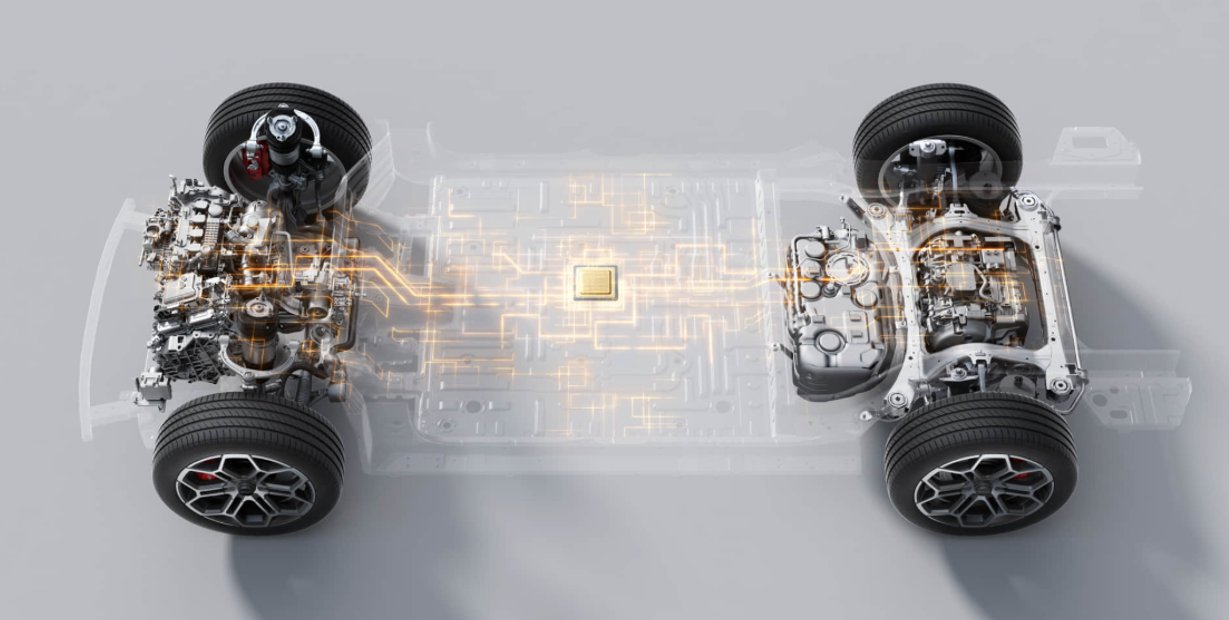
The Shangjie Z9 is expected to continue the Shangjie Z7's chassis architecture, with front double wishbone and rear five-link, equipped with Huawei's Turing platform, and a braking system using Omowill MKC2 brake-by-wire. The hardware foundation is not bad, but the GX7 has already delivered solid test results, while the Z9's tuning level, whether it will have air suspension, and ground clearance geometry are all currently speculation. With chassis, 30% is about hardware and 70% is about tuning—knowing only the structural form is far from enough.
Intelligent Driving: Intelligence that can be delivered is what deserves to be called leading
This is where the two cars differ the most.
The GX7 has ADS 5 Ultra standard across the lineup, with 38 sensors forming the perception array: 1 × 896-line dual-optical-path image-grade LiDAR plus 3 solid-state LiDARs, 5 × 4D millimeter-wave radars, 11 high-perception cameras, and 12 ultrasonic radars. The L3-level eight-redundancy architecture is standard across the lineup—dual perception, computing power, communication, power supply, braking, steering, and positioning—laying the groundwork at the hardware level for future autonomous driving upgrades. Upon delivery, users can immediately use highway navigation assist and intelligent parking, with urban navigation and parking-to-parking functions unlocked via optional packages, covering over 1.2 million parking lots nationwide.
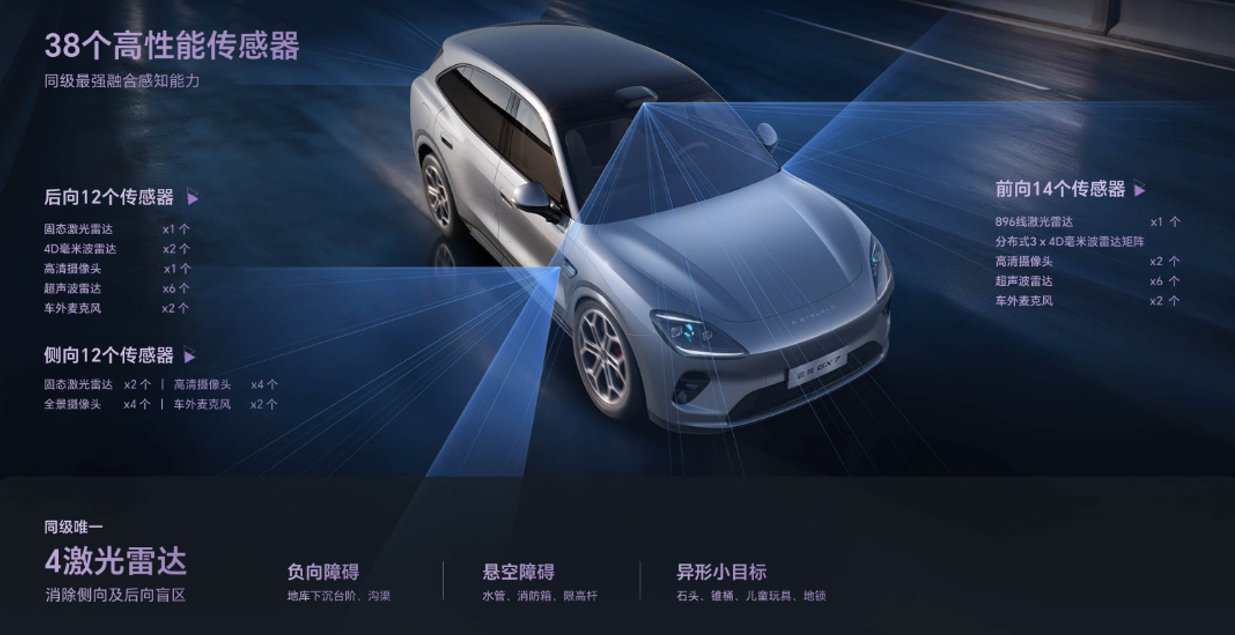
For the Shangjie Z9, currently we can only see the roof LiDAR and several sensor openings from the filing photos. ADS 4 or ADS 5? How many LiDARs? Is there an L3 redundancy architecture? The official side has given no answer to date. Referring to the Z7's practice of standardizing ADS 4.1, the Z9 will most likely carry the Qiankun intelligent driving system, but is the phrase "most likely" worth consumers paying an extra hundred thousand yuan to gamble on?
Conclusion:
What the Qijing GX7 offers is an open-book exam answer: from 229,900 yuan, ADS 5 four-LiDAR intelligent driving, Chitu chassis, extended-range range exceeding 1,500 kilometers. At this price in the mid-to-large SUV market, it is extremely aggressive.
The Shangjie Z9 is positioned higher and has a larger body, but "higher" does not equal "better value." When a car hasn't even announced its basic specifications, what consumers are buying is expectation rather than product.
For families with current car-buying needs, rather than gambling three to four hundred thousand yuan on a futures car that may not be delivered for another six months, it's better to look at the GX7 right in front of you with the keys already prepared. A good consumer decision is not about betting when information is insufficient, but about making judgments when information is sufficient. In this market full of uncertainty, "certainty" itself is a rare kind of product strength.