I. The Reshaped Rules of Luxury
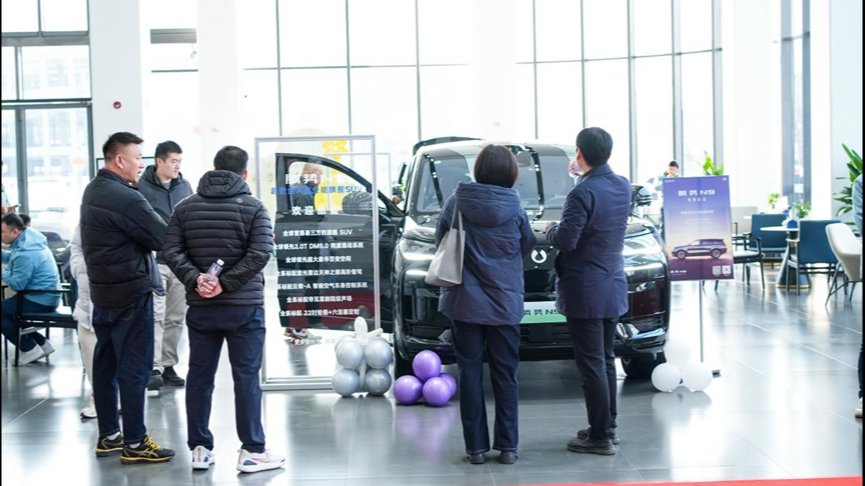
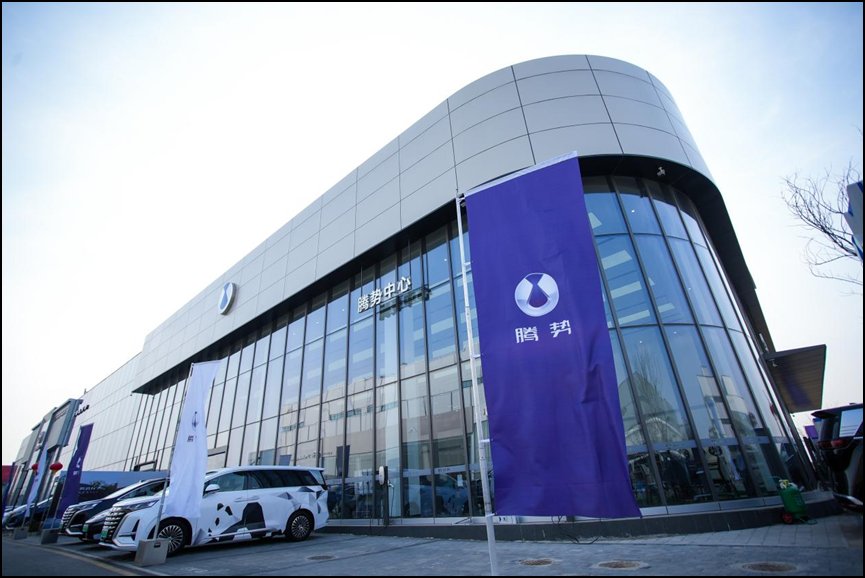
On the afternoon of February 22, under the spotlights at the Shijiazhuang Chang'an Denza Center, the paint of the 2025 Denza N7 refracted the iridescent hues of Aurora Purple, much like the undercurrent of change surging through China's new energy vehicle market. This appreciation event, gathering regional media, owners, and fans, was essentially an experiment in reconstructing the "value coordinate system for luxury electric vehicles"—when the industry has fallen into the inward-scrolling trap of "refrigerators, color TVs, and big sofas," Denza uses its standard across-the-board God's Eye high-level intelligent driving system, 230kW dual-gun supercharging, and 5D cloud-sensation seats to pull the competitive dimension back to the essential battlefield of "mechanical quality + intelligent universal benefit."
"With a starting price of 259,800 yuan, the threshold for lidar-equipped models has been lowered by 70,000 yuan." The on-site presenter tapped the air suspension module of the Cloud Chariot intelligent chassis, and the metallic clink carried a declaration to the market. Compared with the current situation in which NIO ET5T requires an extra 39,000 yuan for NOP+ and the XPeng G6 high-level intelligent driving version carries a 28,000 yuan premium, the Denza N7's pricing strategy is like dropping a boulder into a calm lake. A BYD fan who drove over from Baoding pulled out a calculator: "That's equivalent to compressing the unit price of each tech feature to 1,300 yuan—more aggressive than phone makers' hardware stacking."
II. The Industrial Strategy Behind Technological Equalization
Under the blue glow of the dual 50W wireless fast-charging panel, Denza's sales director revealed a deeper strategic picture: among the 200+ features standard across the lineup, 47 are exclusive configurations found on million-yuan models from traditional luxury brands. This "technological equalization" is by no means philanthropy, but a precision strike based on BYD's scale advantages in three-electric technology.
The cost magic of the 800V silicon carbide platform: compared with the Porsche Taycan's 800V system, which requires an additional 180,000 yuan for optional equipment, the secret behind the Denza N7 offering it as standard lies in the vertical integration of FinDreams Battery's blade cells and SiC modules. As a BYD Research Institute insider revealed: "Our silicon carbide device cost is 54% lower than imported ones, which lets us dare to push technology downward in 250,000-yuan-class models."
The infrastructure breakthrough of dual-gun supercharging: behind the 230kW charging power is BYD's precise calculation of the domestic charging pile power distribution—currently 60% of fast-charging piles on the market are below 120kW, and dual-gun parallel connection can increase charging speed by 83%. This both solves recharging anxiety and avoids the dilemma of insufficient supercharging pile coverage.
"In the past, buying an EV meant choosing among performance, range, and intelligent driving. Now the Denza N7 has carved the answers to the multiple-choice questions into the user agreement." In front of the livestream camera of automotive blogger @Electric Veteran, the engineer demonstrating 350km of range charged in 15 minutes had fine beads of sweat on his temples.
III. The User-Centered Offensive of Detail-Driven Brute-Force Aesthetics
When the media sat down in the Nappa leather-wrapped 5D cloud-sensation seats, the electrically adjustable steering wheel was automatically syncing account memory parameters. This detail of "seamless adaptation" exposes Denza's precise grasp of user pain points:
Counterintuitive temperature control: the inductive cold-air heat dissipation system keeps the wireless charging pad below 38°C. Compared with the Tesla Model Y charging pad, which often runs as hot as 52°C, it solves the embarrassment of "charge for five minutes and your phone can fry an egg."
Reconstruction of acoustic space: the Devialet audio system's specially tuned "drive mode" can use algorithms to compensate for the mid- and high-frequency range swallowed by wind noise at 120km/h. On-site comparative testing showed that its sound quality degradation rate is 22% lower than the Burmester system in the Mercedes-Benz EQS.
Evolution of visual symbols: the meteor-arrow front-end design is not only an aesthetic upgrade, but also lowers the drag coefficient from 0.29Cd to 0.27Cd. Pointing to the integrated light cluster, the designer explained: "Every 3mm width change in each 'arrow feather' has been verified through 300 hours of wind tunnel testing."
The "brute-force aesthetics" built up from these details is rewriting the value evaluation system for luxury electric vehicles. As Ms. Li, an architectural designer who participated in the appreciation event, exclaimed: "It has compressed the cognition of 'luxury' that BBA spent thirty years building into a five-year evolution cycle of the electric era."
IV. Positioning in the Ecological Niche of the Market Jungle
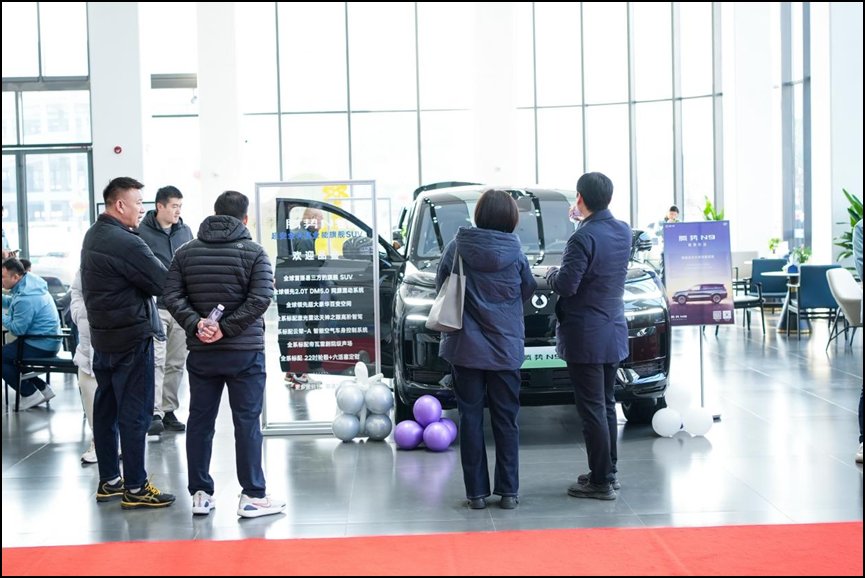
Facing the HarmonyOS cockpit offensive of the AITO M7 and the handling mythology of the Zeekr 001, the Denza N7 chose to enter the battlefield as an "all-around hexagon warrior." The "performance pyramid" formed by three powertrain options is in fact a precise market filter:
550km standard version: sniping at the Model Y rear-wheel-drive version, using the Cloud Chariot chassis + lidar to create a generational-gap strike
702km long-range version: suppressing the NIO ET5T 75kWh version, creating a psychological anchor with 127km more range
630km four-wheel-drive version: engaging in close combat with the Avatr 12 four-wheel-drive version, establishing a performance advantage with a dual-motor total output of 340kW
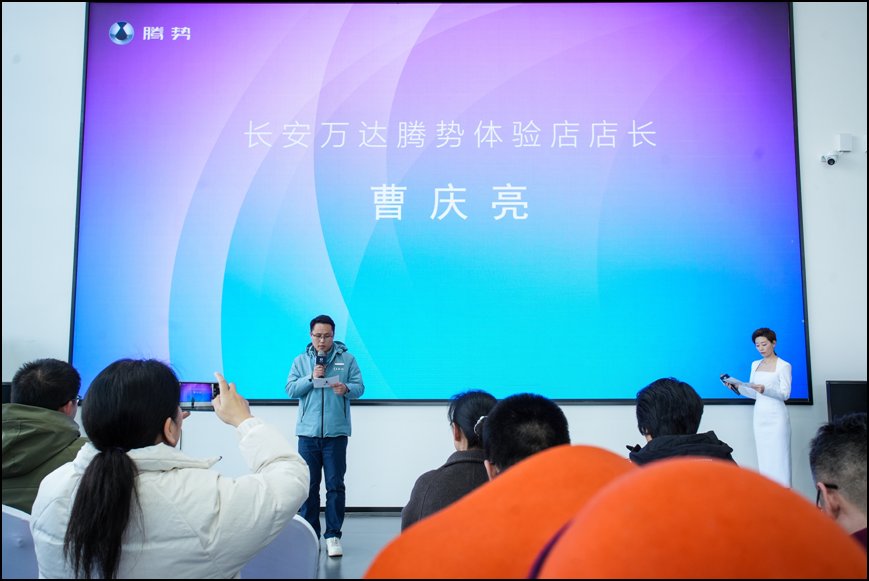
This Tian Ji horse-racing-style product layout, combined with BYD's vast dealer network, is stirring up a channel storm in the North China market. According to the manager of the Shijiazhuang Denza experience store: "We received 37 orders on the first day of presale, 19 of them from BBA fuel-vehicle users."
V. The Normandy Moment of Intelligent Electric Vehicles
When the appreciation event entered the test-drive segment and the convoy passed through the Zhengding ancient city wall, the N7's navigation-assisted driving system automatically recognized the curved outline of the thousand-year-old barbican. Amid the intersection of history and technology across time and space, the Denza N7's ambition is already clear: it not only seeks to compete for market share in the 300,000-yuan-class EV segment, but also aims to become the "ferry boat" for traditional luxury car users transitioning to electrification.
In 2025, when electrification penetration has surpassed 38%, this car may be stepping precisely on the singularity of market fission—when lidar begins to spread to the 250,000-yuan-class market, when 800V high-voltage platforms are no longer a patent of million-yuan luxury cars, when intelligent chassis tuning can be iterated in the cloud, this "technological equalization movement" triggered by the Denza N7 may reconstruct the entire industry's rules of the game.
As BYD Group Chairman Wang Chuanfu asserted at an internal meeting: "In the second half of the EV era, it is time to let technology return to the essence of mobility." And the Aurora Purple shining in the Shijiazhuang night sky at this moment may well be the new dawn of China's auto industry charging toward the throne of luxury.


