It is often said that if you want to buy a new energy vehicle, you should make your move before the end of this year, otherwise you will not be able to enjoy the purchase tax reduction and exemption policy. Actually, that is not the case. On October 9, a major announcement: the Ministry of Industry and Information Technology, the Ministry of Finance, and the State Taxation Administration jointly issued an announcement on the technical requirements for new energy vehicle products eligible for vehicle purchase tax reduction and exemption in 2026-2027.

Simply put, next year, the purchase tax reduction and exemption policy for new energy vehicles will continue! However, the new rules have been adjusted, and not all vehicles will be eligible.
As is well known, China has a great deal of policy support for new energy vehicles, among which purchase tax exemption is one of the most important policies. Although it is now confirmed that next year's tax exemption cap will be adjusted from the original 30,000 yuan to 15,000 yuan, representing a pullback in policy support, it was unexpected that the state would also put forward stricter requirements, with some key figures showing an increase of 132.6%. If, after New Year's Day next year, some models still fail to meet national requirements, then non-compliant models will not be able to enjoy the purchase tax exemption policy support.

Today's new rules focus on technical thresholds. To summarize briefly, in the next two years, the technical requirements for new energy vehicles to enjoy reduction and exemption policies have been raised.
First, there are clear corresponding model limits for the "electric energy consumption per 100 kilometers" of pure electric vehicles.
This means that in the future, high-energy-consumption electric models will no longer enjoy policy benefits, which indirectly pushes automakers to work harder on energy efficiency.

Second, the requirements for plug-in hybrids (including extended-range models) are clearer:
The pure electric driving range of plug-in hybrids should meet a conditional equivalent all-electric range of no less than 100 kilometers;
This is higher than previous requirements, although at present most such models on the market have pure electric ranges of at least 200 kilometers.
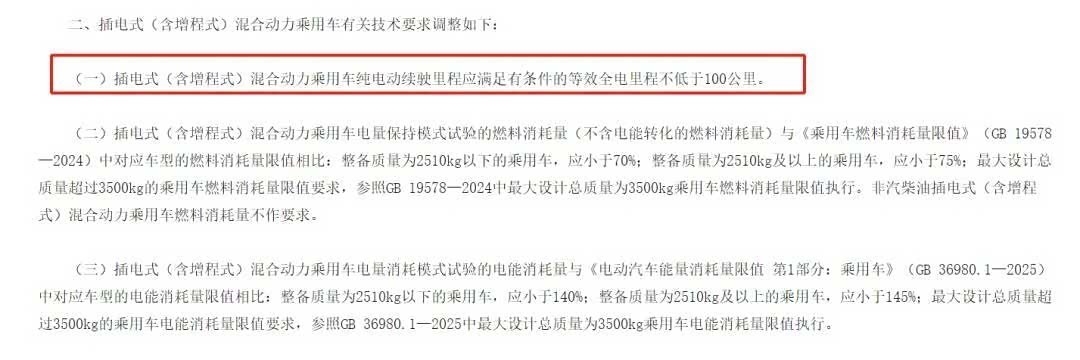
At the same time, clear limits have also been set for fuel consumption in charge-sustaining mode tests relative to the fuel consumption limits of the corresponding model, and for electric energy consumption in charge-depleting mode tests, among others.
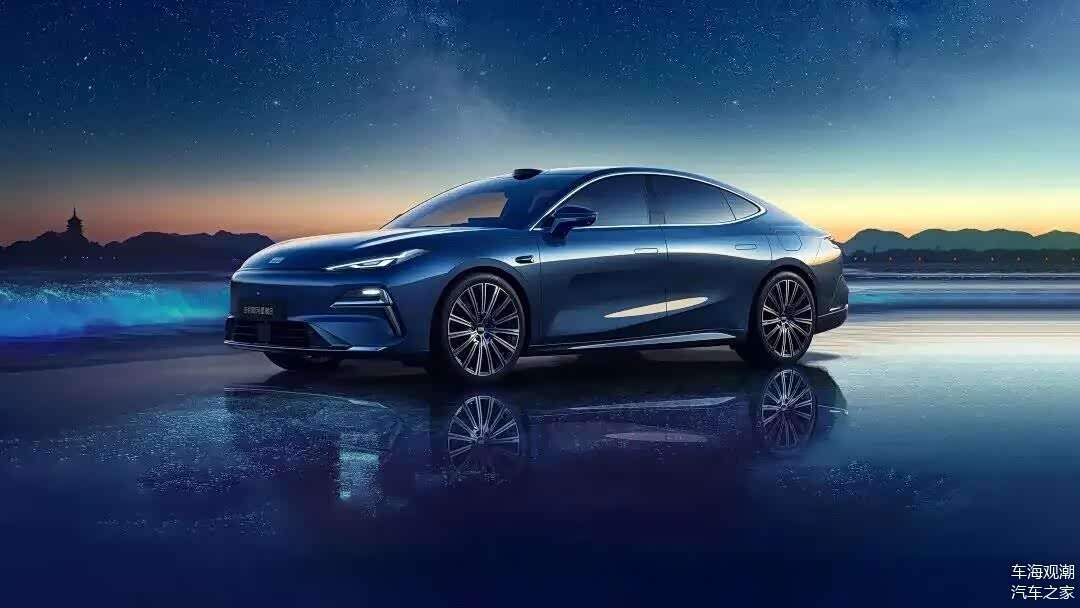
For buying a car next year, reductions and exemptions continue, but the threshold has been set. For consumers, it is either seize the timing to pay less or wait for the market and buy a good car.
As policy support pulls back, what will be eliminated are enterprises that rely on subsidies and lack core technologies. In other words, next year there will be more new cars with outstanding performance in cost control, product positioning, and the balance between oil and electricity.


